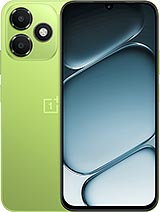
Blackview Zeno 5 review
The Zeno 5 suits someone in a tight budget who prioritizes portability and stylus support over screen clarity and speed. Anyone else shopping tablets at this price should look at models with sharper screens and faster chips; the compromises here outweigh the weight savings."
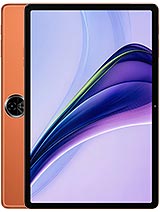
This review is written with AI assistance from Blackview’s published specifications and public benchmark data for the Blackview Zeno 5, and the rating is spec-based. GoSolo does not physically test devices; where we estimate real-world behaviour such as battery life or charge time, we say so. How we rate phones.
Overview
The Zeno 5 is an 11-inch tablet with a stylus for budget users and students, held back by a low-resolution 137 ppi screen, entry-level processor, and minimal RAM configurations. It's a no-frills option that trades polish for portability and price, suitable if you just need basic productivity and don't mind the dated feel.
Design & Build
At 573g and 8.4mm thick, the Zeno 5 is light for an 11-inch tablet, which counts as its main design win. The form factor suits commuters or students who want something larger than a phone but not a brick in a bag. The Mohs level 5 screen protection is weak—it scratches easily against keys and coins—and the plastic back and frame feel hollow compared to devices at even modest price points above this. Stylus support is present but the pen itself is likely cheap and pressure-sensitive. The dual nano-SIM slot is unusual for a tablet in 2026, suggesting this is aimed at markets where connectivity flexibility matters more than sleekness.
Display
This is where the Zeno 5 makes its biggest compromise. The 800x1280 resolution on an 11-inch screen yields just 137 ppi, which is noticeably blurry at normal viewing distance—text will need zoom in reading apps, and photographs look soft. The 16:10 aspect ratio is practical for content, but the 350 nits brightness is dim for outdoor use or reading in sunlight. A 90Hz refresh helps scrolling feel less janky, but it cannot mask the underlying resolution deficit. For a tablet released in 2026, this is well below what competitors at the budget tier offer; even cheap models now hit 1440p or higher on 10-inch screens. If you plan to read books, edit documents, or view photos regularly, this screen will frustrate.
Performance
The Unisoc T7250 is entry-level silicon, and the Zeno 5 backs it with just 3GB or 8GB RAM depending on which variant you buy. The base model is a non-starter for multitasking. Expect sluggish app switching, stuttering in games, and delays loading web pages. Even the 8GB version will not handle heavy workloads smoothly. The UFS 2.1 storage is slower than modern standards; file transfers and app launches will feel poky. This chipset is fine for email, light web browsing, video playback, and simple note-taking, but anything beyond that—photo editing, spreadsheets, gaming—will expose the hardware's limits. By 2026 tablet standards, this is genuinely weak, not just budget-friendly.
Software
Android 16 with DokeOS_P 5.0 is Blackview's custom skin, which tends to add bloat rather than refinement. Without hands-on testing, it is unclear how well this particular combination performs on entry-level hardware, but history suggests you will encounter slowdowns and unnecessary apps pre-loaded. Security patches and OS updates are likely inconsistent on a budget device from a smaller brand.
Camera
The 13MP rear and 8MP front cameras are functional but unremarkable. Both shoot 1080p video at 30fps only, which is standard for budget tablets but uninspiring in 2026. The f/2.0 aperture on the main sensor is respectable, and HDR is present, but the small 1/4.0" sensor will struggle in low light and deliver soft details. Camera is not a strong point here, and if photo or video work is in your plans, look elsewhere.
Battery & Charging
The 8300 mAh battery is large and should deliver solid all-day runtime for light use—the entry-level chipset is power-efficient, which helps. However, the spec sheet lists only 18W charging, which is slow even by budget standards; rivals now offer 30W or higher at similar prices. Charging this tablet fully will take about 2.5 to 3 hours, which is tedious if you need it daily. Battery endurance is a strength, but the charging speed undermines the convenience.
Value & Verdict Context
The Zeno 5 is cheap, and it looks it. You get a large screen and a stylus for basic note-taking and light content consumption, but almost everything here—resolution, speed, build quality, charging—lags behind what similarly-priced budget tablets now deliver. The weight and thickness are genuinely useful for portability. If you are a student in a region with limited options and need a stylus tablet under $150 for note-taking and reading, this can work. But if you can stretch your budget to a model with a 1080p or higher screen, a faster chipset, and at least 4GB RAM as standard, you will notice the difference immediately and regret this purchase within weeks.
Verdict
The Zeno 5 suits someone in a tight budget who prioritizes portability and stylus support over screen clarity and speed. Anyone else shopping tablets at this price should look at models with sharper screens and faster chips; the compromises here outweigh the weight savings."
- Light and thin for an 11-inch tablet, easy to carry in a backpack or messenger bag
- Large 8300 mAh battery delivers several days of runtime on light use
- Stylus support included, useful for students taking notes or basic sketching
- 137 ppi screen is blurry and difficult to read; text needs constant zooming in most apps
- Entry-level Unisoc T7250 with 3GB base RAM makes the device slow at everyday tasks like switching apps and browsing
- 18W charging is slow; full charge takes about 2.5–3 hours, much slower than budget rivals
Blackview Zeno 5 Key Specifications
The essentials at a glance. See the full spec sheet.
| Released | 2026, June |
|---|---|
| Display | 11.0 inches, 350.9 cm2 (~81.0% screen-to-body ratio), IPS LCD, 90Hz, 350 nits |
| Resolution | 800 x 1280 pixels, 16:10 ratio (~137 ppi density) |
| Chipset | Unisoc T7250 (12 nm) |
| RAM & storage | 128GB 3GB RAM, 128GB 8GB RAM |
| Main camera | 13 MP, f/2.0, (wide), 1/4.0", AF |
| Selfie camera | 8 MP, f/2.2, (wide), 1/5.0" |
| Battery | 8300 mAh |
| Software | Android 16, DokeOS_P 5.0 |
| Dimensions | 257 x 168.6 x 8.4 mm (10.12 x 6.64 x 0.33 in) |
| Weight | 573 g (1.26 lb) |
| Durability | Stylus support |
| Network | GSM / HSPA / LTE |
| NFC | No |
| USB | USB Type-C, OTG |
Blackview Zeno 5 FAQ
Common questions, answered from the spec sheet.
Does the Zeno 5 support 5G?
No. The Zeno 5 tops out at GSM / HSPA / LTE, without 5G.
What chipset does the Zeno 5 use?
The Zeno 5 runs on the Unisoc T7250 (12 nm).
What display does the Zeno 5 have?
A 11.0 inches, 350.9 cm2 (~81.0% screen-to-body ratio) IPS LCD, 90Hz, 350 nits, 800 x 1280 pixels, 16:10 ratio (~137 ppi density).
How big is the Zeno 5 battery?
The Zeno 5 has a 8300 mAh battery.
Does the Zeno 5 have NFC?
No, the Zeno 5 does not list NFC support.
Is the Zeno 5 water resistant?
The Zeno 5 carries a Stylus support rating.
Does the Zeno 5 support a microSD card?
Yes, the Zeno 5 supports expandable storage (microSDXC (uses shared SIM slot)).
Alternatives to consider
If the Zeno 5 isn’t quite right, these are the closest calls.
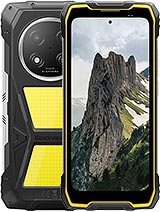
Rock 2 Pro
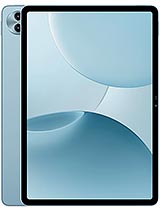
Mega 5

Link 1 Kids
Zeno 10
Galaxy M17e