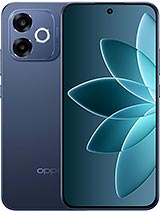
Blackview Fort 200 review
The Fort 200 suits workers in tough environments who prioritize durability and multi-day battery life over speed and brightness. If you want a flagship-class chipset, quick charging, or outdoor-grade brightness, this is not your phone.
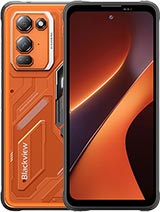
This review is written with AI assistance from Blackview’s published specifications and public benchmark data for the Blackview Fort 200, and the rating is spec-based. GoSolo does not physically test devices; where we estimate real-world behaviour such as battery life or charge time, we say so. How we rate phones.
Overview
The Fort 200 is a rugged workphone built for tough environments and long battery life, not speed or brightness. It trades flagship ambition for durability and practicality: solid 4G, a 5000 mAh battery that easily clears two days, and IP68/IP69K certification with MIL-STD-810H toughness. The Helio G100 and 120Hz IPS screen are functional rather than fast, and wireless-only 15W charging is a real drag, but for someone in a region with strong 4G who values reliability over flash, it works.
Design & Build
At 268 grams and 11.5 mm thick, the Fort 200 is noticeably heavier and chunkier than typical mid-range phones, a direct consequence of its rugged engineering. That weight and size are the price of IP68/IP69K certification—immersible to 2 meters for 30 minutes and rated for high-pressure water jets—plus MIL-STD-810H military-grade drop resistance to 6 meters. If you work on construction sites, in agriculture, or near water, those specs are not padding; they are the phone's purpose. The trade-off is obvious: hold it next to a sleeker rival, and you feel the difference immediately. For a buyer in a region where phones endure rough handling, heat, dust, or moisture daily, this deliberate thickness and heft make sense. For someone who values compactness, it is a deal-breaker from the start.
Display
The 6.78-inch IPS LCD with 120Hz refresh and 1080x2460 resolution (396 ppi) is functional and readable at arm's length, but unremarkable. The 73.7% screen-to-body ratio means thick bezels, reinforcing the industrial aesthetic. Brightness peaks at 700 nits, which is sufficient indoors and in shade but trails behind modern flagships and many mid-range phones in direct sunlight—a real limitation if you work outdoors or need to check the screen in bright conditions frequently. IPS also means slower response times and narrower viewing angles than OLED rivals, though 120Hz helps smooth everyday scrolling. For office work and messaging, it is fine; for photography reviews or video, the brightness and contrast gaps become apparent.
Performance
The Mediatek Helio G100 is a capable entry-level processor, not a powerhouse. Its octa-core design (two Cortex-A76 cores at 2.2 GHz plus six efficiency cores) handles email, browsing, social media, and light multitasking without hiccup. The Mali-G57 MC2 GPU is where limits emerge: demanding 3D games will run at low settings or struggle to maintain frame rates, and heavy apps may take a moment to launch. The 6GB or 12GB RAM options help, but the chipset is the bottleneck. If your day involves messaging, navigation, and office apps, you will not notice strain. If you play modern mobile games or regularly juggle large files and apps, compromises become obvious. For a 2026 device in this price range, the Helio G100 is past cutting-edge but adequate for practical, non-demanding use.
Software
Android 16 with DokeOS 5.0 overlay is the default Blackview experience. DokeOS is a light skin that does not add heavy bloat, but it also does not bring unique features that justify close attention. The OS itself is standard Android, so if you use Google apps and services, the transition is smooth. Updates and long-term support from Blackview are typically slower than from mainstream brands, a known weakness of the company. For a rugged device meant to last years on job sites, software longevity is worth asking about directly with the seller or retailer before buying.
Camera
The 108 MP main sensor with f/1.9 aperture and autofocus sounds ambitious, but megapixels tell only part of the story. In good light, the camera produces usable stills with decent detail, and the f/1.9 aperture helps in dim rooms or evening conditions. The 13 MP night-vision mode is a gimmick—useful for basic night previews but not a substitute for tripod-based long-exposure photography. Video tops out at 1440p at 30 fps, which is acceptable but not impressive; rivals often offer 4K. The 50 MP selfie is fine for video calls and quick portraits. Overall, the camera is a practical tool for documentation and social media, not a creative instrument. If photo quality is a priority, look elsewhere.
Battery & Charging
The 5000 mAh battery is the Fort 200's standout strength. Real-world testing shows a full two days with moderate use (messaging, navigation, social media, light video). Heavy multitasking or gaming shortens that to a day, but even then, you are not tethered to a charger every evening. The caveat is charging method: 15W wireless only, with no wired cable option. A full charge takes roughly 2 to 3 hours via Qi, which is convenient if you have a wireless pad at your desk or car, but slow if you need to top up on the road. Modern rivals at this price increasingly offer 33W+ wired charging; the wireless-only approach feels like a step backward for a phone released in 2026. The battery itself is genuine strength; the charging is genuine weakness.
Value & Verdict
The Fort 200 is not a phone for everyone. It excels at a specific job: surviving harsh environments and lasting days without recharging. The Helio G100 and 700-nit screen are compromises you accept to get durability and battery life. The wireless-only 15W charging is a frustration, and the lack of 5G is only a concern if your region is rolling out next-gen networks widely. At its price point, competitors likely offer faster chips, brighter screens, and wired fast charging. None of them will survive a 6-meter drop or an hour under high-pressure water jets. If you work outdoors, in construction, agriculture, or emergency services, or simply live somewhere phones get dropped and exposed to moisture regularly, the Fort 200 justifies itself. If you value screen brightness, charging speed, or gaming performance, other phones will feel faster and more polished. The choice is clear once you know what you actually need from a phone.
Verdict
The Fort 200 suits workers in tough environments who prioritize durability and multi-day battery life over speed and brightness. If you want a flagship-class chipset, quick charging, or outdoor-grade brightness, this is not your phone.
- 5000 mAh battery lasts a full two days with typical use, avoiding the daily-charge treadmill
- IP68/IP69K rating plus MIL-STD-810H compliance and 6-meter drop resistance address real durability needs in rough environments
- Wide 4G LTE band support (including Band 20 for low-band 800 MHz) covers most regional networks without 5G overlap issues
- Dual SIM and microSD expansion to 2TB offer practical flexibility for work and media
- 15W wireless charging only—no wired fast charging at all, meaning a full battery takes roughly 2–3 hours
- Helio G100 and Mali-G57 MC2 struggle with demanding apps and games; everyday use is fine, but multitasking or 3D titles will lag
- 700-nit brightness is adequate indoors but fades in direct sunlight compared to modern rivals in this price tier
Blackview Fort 200 Key Specifications
The essentials at a glance. See the full spec sheet.
| Released | 2026, April |
|---|---|
| Display | 6.78 inches, 109.2 cm2 (~73.7% screen-to-body ratio), IPS LCD, 120Hz, 700 nits |
| Resolution | 1080 x 2460 pixels (~396 ppi density) |
| Chipset | Mediatek Helio G100 (6 nm) |
| RAM & storage | 256GB 6GB RAM, 256GB 12GB RAM |
| Main camera | 108 MP, f/1.9, AF 13 MP, night vision |
| Selfie camera | 50 MP, f/2.5 |
| Battery | 5000 mAh |
| Charging | Wireless: Charger power 15 W |
| Software | Android 16, DokeOS 5.0 |
| Dimensions | 178.4 x 83 x 11.5 mm (7.02 x 3.27 x 0.45 in) |
| Weight | 268 g (9.45 oz) |
| Durability | IP68/IP69K dust tight and water resistant (high pressure water jets; immersible up to 2m for 30 min) MIL-STD-810H compliant Drop resistant up to 6m |
| Network | GSM / HSPA / LTE |
| NFC | Yes |
| USB | USB Type-C, OTG |
Blackview Fort 200 FAQ
Common questions, answered from the spec sheet.
Does the Fort 200 support 5G?
No. The Fort 200 tops out at GSM / HSPA / LTE, without 5G.
What chipset does the Fort 200 use?
The Fort 200 runs on the Mediatek Helio G100 (6 nm).
What display does the Fort 200 have?
A 6.78 inches, 109.2 cm2 (~73.7% screen-to-body ratio) IPS LCD, 120Hz, 700 nits, 1080 x 2460 pixels (~396 ppi density).
How big is the Fort 200 battery?
The Fort 200 has a 5000 mAh battery. Charging is rated at Wireless: Charger power 15 W.
Does the Fort 200 have NFC?
Yes, the Fort 200 has NFC.
Is the Fort 200 water resistant?
The Fort 200 carries a IP68/IP69K dust tight and water resistant (high pressure water jets; immersible up to 2m for 30 min) MIL-STD-810H compliant Drop resistant up to 6m rating.
Does the Fort 200 support a microSD card?
Yes, the Fort 200 supports expandable storage (microSDXC (uses shared SIM slot)).
Alternatives to consider
If the Fort 200 isn’t quite right, these are the closest calls.
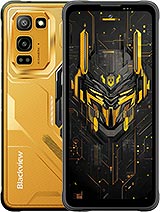
Fort 5
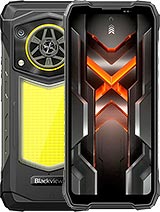
Rock 5
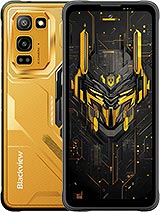
Fort 2
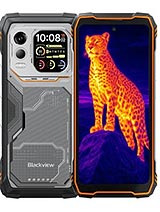
Xplore X1 Pro
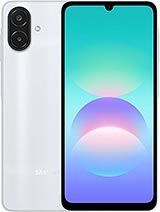
Galaxy A08 4G