Asus Pad (T3201) review
The Asus Pad (T3201) suits anyone who spends most of their tablet time watching, reading, or taking notes—the OLED display and stylus support are genuinely useful. Skip it if you need strong cameras, a faster charger, or extra RAM for serious multitasking, or if you plan to replace a laptop with a tablet.
This review is written with AI assistance from Asus’s published specifications and public benchmark data for the Asus Pad (T3201), and the rating is spec-based. GoSolo does not physically test devices; where we estimate real-world behaviour such as battery life or charge time, we say so. How we rate phones.
Overview
The Asus Pad (T3201) is a sleek, lightweight 12.2-inch tablet with an excellent OLED display and strong wireless connectivity, but its camera setup and lack of charging specs are notable gaps. It's a competent mid-range tablet that excels at content consumption, though the processor and camera performance suggest it's built more for media than productivity or creativity.
Design & Build
At 6.5mm thick and 523g, the Asus Pad (T3201) is remarkably thin and light for a 12.2-inch tablet. For comparison, most large tablets this generation sit closer to 8-10mm and hover around 600g or more. That slenderness is a real advantage if you plan to carry it regularly. The Pure White finish and high screen-to-body ratio (89.1%) give it a modern, minimal look. Stylus support is included, which hints at note-taking and drawing capability, though the spec sheet doesn't detail pressure sensitivity or latency—both critical for serious stylus use. The body feels like it's designed for consumption and travel rather than a desk workhorse.
Display
The 12.2-inch OLED panel is where this tablet shines. At 2800x1840 pixels in a 3:2 ratio, you get a sharp 275 ppi—high enough that individual pixels disappear at normal viewing distance. The real standouts are the 144Hz refresh rate, 2000 nits peak brightness, and Dolby Vision support. That brightness level is exceptional for a tablet and makes this genuinely usable in direct sunlight, a weakness of many tablets. The 3:2 aspect ratio is kinder to documents and web content than the 16:10 you see everywhere else. For streaming, reading, and office work, this is a compelling screen. The 144Hz will appeal most to gamers, though the chipset may not keep up with demanding titles at high settings.
Performance
The Mediatek Dimensity 8300 is a high-end processor for its generation, sitting near flagship territory—but pairing it with just 8GB of RAM is a conservative choice that limits real-world multitasking and heavy app switching. On paper, the chip handles everyday use, moderate gaming, and video editing with ease. UFS 3.1 storage is fast. In practice, 8GB means this tablet is less future-proof than rivals that bundle 12GB or more. If your workflow involves editing, running multiple creative apps simultaneously, or heavy gaming, you'll hit those RAM limits sooner. For scrolling, streaming, and document work, it'll feel snappy. The octa-core CPU with mixed performance and efficiency cores is designed to balance power and battery life, which makes sense for a tablet this thin.
Software
Android 16 is current and expected for a 2026 tablet. Asus typically layers its own interface on top, which can feel clunky on tablets, but the spec sheet doesn't detail what version of the Asus skin ships with this unit or how customizable it is. Android's multi-window and split-screen support are strong on large screens, so the OS itself should feel at home on a 12.2-inch display. No real concern here for a device launching in mid-2026, but how Asus handles the interface—bloatware, update support, and optimization for the 144Hz screen—will matter more once hands-on reviews appear.
Camera
The 13MP wide camera and 5MP selfie are weak points. For a tablet in 2026, especially one with otherwise flagship-class specs, these sensors feel outdated. 1080p video capture is particularly disappointing; rivals now offer 2K or 4K. There's no mention of night mode, portrait mode, or any computational photography features. LED flash on the rear suggests this is a basic sensor, not a modern one. If you plan to use this for document scanning, video calls, or casual photography, you'll manage. For anything beyond that—shooting clips or photos you care about—you'll want your phone instead. The camera is genuinely the tablet's Achilles heel.
Battery & Charging
The 9000mAh battery is respectable but not exceptional for a 12.2-inch tablet; rivals often ship 10,000+ mAh. A 9000mAh pack should deliver one to two days of moderate use, though the 144Hz display and bright OLED panel will drain faster at peak brightness. The conspicuous gap is charging speed: no wattage is listed in the spec sheet, which is unusual and raises questions. Modern tablets in this range typically offer 30-45W charging. Without clarity on charging time, it's hard to assess whether you're looking at a quick-charge device or a slower one. This is a real spec-sheet oversight that should be clarified before purchase.
Value & Verdict Context
For a 2026 tablet, the Asus Pad (T3201) is pitched at the content-consumption sweet spot: excellent for watching, reading, and browsing, with enough power for light creative work. The display is genuinely impressive, and the thinness and light weight are real daily conveniences. However, the weak cameras, unclear charging story, and modest RAM allocation hold it back from being a no-compromise device. If you want a second screen for media and notes, with a stylus on the side, this works. If you're hunting for a tablet to replace a laptop or do serious creative work, you'll want to look elsewhere. The Dimensity 8300 is competent but not in the flagship league; pair that with cameras that feel forgotten and you have a device that's specialized for passive consumption more than production.
Verdict
The Asus Pad (T3201) suits anyone who spends most of their tablet time watching, reading, or taking notes—the OLED display and stylus support are genuinely useful. Skip it if you need strong cameras, a faster charger, or extra RAM for serious multitasking, or if you plan to replace a laptop with a tablet.
- 12.2-inch OLED display with 144Hz refresh, 2000 nits peak brightness, and Dolby Vision—genuinely excellent for watching and reading
- Extremely thin and light at 6.5mm and 523g, making it pocket-friendly for a tablet this size
- Wi-Fi 6e and Bluetooth 5.3 for modern wireless performance; USB-C 3.0 with DisplayPort for external display support
- Stylus support and microSDXC expansion for flexible use cases
- 13MP rear and 5MP front cameras are underpowered even for a tablet; 1080p video only, no sign of computational photography
- No charging speed or wattage listed in specs, which is unusual and suggests either modest charging or an oversight in the spec sheet
- Dimensity 8300 is competent but not a flagship chip; paired with just 8GB RAM, it's adequate for browsing and light apps but may struggle with demanding games or multitasking
Asus Pad (T3201) Key Specifications
The essentials at a glance. See the full spec sheet.
| Released | 2026, July 17 |
|---|---|
| Display | 12.2 inches, 440.7 cm2 (~89.1% screen-to-body ratio), OLED, 144Hz, 2000 nits (peak), Dolby Vision |
| Resolution | 2800 x 1840 pixels, 3:2 ratio (~275 ppi density) |
| Chipset | Mediatek Dimensity 8300 (4 nm) |
| RAM & storage | 128GB 8GB RAM, 256GB 8GB RAM |
| Main camera | 13 MP, (wide), AF |
| Selfie camera | 5 MP |
| Battery | 9000 mAh |
| Software | Android 16 |
| Dimensions | 271.1 x 182.4 x 6.5 mm (10.67 x 7.18 x 0.26 in) |
| Weight | 523 g (1.15 lb) |
| Durability | Stylus support |
| Network | No cellular connectivity |
| NFC | No |
| USB | USB Type-C 3.0, DisplayPort 1.4, OTG |
Asus Pad (T3201) FAQ
Common questions, answered from the spec sheet.
Does the Pad (T3201) support 5G?
No. The Pad (T3201) tops out at No cellular connectivity, without 5G.
What chipset does the Pad (T3201) use?
The Pad (T3201) runs on the Mediatek Dimensity 8300 (4 nm).
What display does the Pad (T3201) have?
A 12.2 inches, 440.7 cm2 (~89.1% screen-to-body ratio) OLED, 144Hz, 2000 nits (peak), Dolby Vision, 2800 x 1840 pixels, 3:2 ratio (~275 ppi density).
How big is the Pad (T3201) battery?
The Pad (T3201) has a 9000 mAh battery.
Does the Pad (T3201) have NFC?
No, the Pad (T3201) does not list NFC support.
Is the Pad (T3201) water resistant?
The Pad (T3201) carries a Stylus support rating.
Does the Pad (T3201) support a microSD card?
Yes, the Pad (T3201) supports expandable storage (microSDXC).
Alternatives to consider
If the Pad (T3201) isn’t quite right, these are the closest calls.
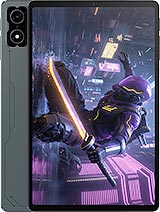
Black Shark Gaming Tablet
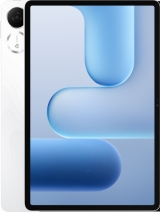
Pad 10 Pro
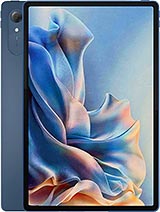
Moto Pad 70 Pro
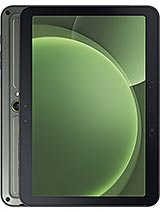
Galaxy Tab Active5 Pro
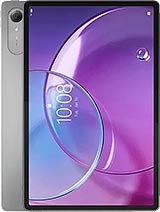
Idea Tab Pro Gen 2