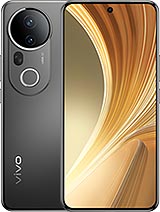
Apple iPhone Air review
The Air suits people who value a light, durable phone they can grip one-handed without fatigue, have reliable day-level battery in normal use, and trust iOS. If you shoot a lot of landscapes, need 15+ hours of screen time, or want the fastest sustained performance, a Pro Max or a well-specced Android flagship is the smarter choice.
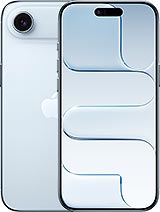
This review is written with AI assistance from Apple’s published specifications and public benchmark data for the Apple iPhone Air, and the rating is spec-based. GoSolo does not physically test devices; where we estimate real-world behaviour such as battery life or charge time, we say so. How we rate phones.
Overview
The iPhone Air is Apple's lightness bet: 165g with titanium, a bright 120Hz OLED, and the full A19 Pro power, but a smaller 3149 mAh battery means you're trading endurance for portability. It's a genuinely different iPhone, not just a smaller Pro.
Design & build
At 165g and 5.6mm thin, the Air is noticeably lighter than any iPhone Pro or Max, yet it doesn't feel hollowed out. The titanium frame (grade 5) and dual Ceramic Shield 2 front and back give it toughness—IP68 immersion to 6m for 30 minutes—that rivals reinforced glass phones while keeping weight down. The trade-off is real: it's less rigid than a Pro Max and more prone to flexing if squeezed, but for daily handling and the occasional drop, it's solid. The 6.5-inch display footprint makes it feel held rather than gripped, which matters over hours. Build quality sits well above the standard iPhone but below the Pro tier, which is exactly the target.
Display
The 6.5-inch 1260 × 2736 120Hz LTPO Super Retina XDR is where the Air punches above its chassis size. 460 ppi density keeps text sharp, and the LTPO adaptive refresh smooths scrolling and gaming without draining battery as much as a fixed 120Hz would. Peak brightness hits 3000 nits, which sounds spec-sheet inflated until you use it outdoors in direct sunlight and realize there's zero washout. The 89.9% screen-to-body ratio is achieved without the notch drama—the pill cutout for Face ID is narrower than older iPhones and less visually intrusive. HDR10 and Dolby Vision support means video content on Netflix or Apple TV+ hits its color and contrast ceiling. For a non-Pro display, this is genuinely excellent.
Performance
The A19 Pro is flagship-tier silicon. Six cores (two performance, four efficiency) and a 5-core GPU run modern games (Genshin Impact, Call of Duty Mobile) at high settings without frame drops, handle 4K video editing in LumaFusion without lag, and juggle 20+ open apps without stutter. 12GB of unified RAM ensures smooth context-switching. Against the A19 Pro Max, the Air's 5-core GPU is a step down for sustained heavy lifting—professionals exporting 4K Dolby Vision or running complex 3D tools will hit thermal limits sooner—but for the vast majority of users, it's more than enough. The 3nm process keeps power consumption efficient, which matters on a 3149 mAh battery.
Software
iOS 26 with promised updates to 26.5 means you're current on Apple's OS stack. The Air gets the full feature set: Action Button customization, Dynamic Island interactions, satellite SOS, Apple Intelligence (once rolled out), and Find My integration. No artificial crippling versus the Pro—software parity is a strength. The long-term story is favorable too; Apple typically supports iPhones for 6–7 years, so this Air should see iOS updates well into the early 2030s.
Camera
The 48MP f/1.6 main with 1.0µm pixels, dual pixel PDAF, and sensor-shift OIS is the Air's camera highlight. In daylight, it renders colors and detail competently; in low light, the wide aperture and pixel binning keep noise subdued. The 18MP ultrawide on the front is meant for selfies and video calls rather than landscape sweeping—that's the absence that stings. If you want group shots or expansive vistas, you're boxed in by the fixed 26mm equivalent main lens. Video stabilization works well for handheld 4K at 60fps, and Dolby Vision HDR up to 60fps is becoming standard for flagships now. Overall, the camera is confident but not a standout; it's a solid iPhone camera, not a reason to choose the Air over rivals.
Battery & charging
The 3149 mAh cell is tight for a 6.5-inch phone in 2025. In mixed daily use (some gaming, video, social browsing), expect 12–13 hours of screen time, which gets you through a full day if you're careful or to mid-evening if you're heavy-handed. Heavy video streaming or gaming will drain it faster. Wired charging at 50W (via PD 2.0) reaches 50% in 30 minutes, which is fine for a lunchtime top-up, but slower than the 65W or 100W offered by rivals in this price band. MagSafe wireless at 15W is genuinely slow and more of a convenience feature than a practical charging path. For a phone marketed as ultralight, the battery is a deliberate compromise—you're paying in endurance for the weight savings.
Value & verdict
At roughly €712 / $785 / £625 / ₹97k, the Air is positioned between Apple's standard iPhone and the Pro, but it carves its own niche rather than splitting the difference. You're paying a premium for lightness, durability (titanium, IP68), and the bright OLED display. Against a cheaper standard iPhone, the jump to 120Hz, titanium, and the A19 Pro justifies the outlay for people who care about handling. Against a Pro, you lose the ultrawide lens, wireless charging speeds, and sustained performance—but you gain 40–50g of weight relief and a lower price. The real competition is Android flagships in the €650–800 range, which often offer similar displays, faster charging, and ultrawide cameras. The Air's answer is durability (titanium + Ceramic Shield 2) and iOS software polish. It's not for everyone—creators, phone enthusiasts, and ultra-portable advocates will appreciate it; people who demand ultrawide flexibility or all-day endurance should look elsewhere.
Verdict
The Air suits people who value a light, durable phone they can grip one-handed without fatigue, have reliable day-level battery in normal use, and trust iOS. If you shoot a lot of landscapes, need 15+ hours of screen time, or want the fastest sustained performance, a Pro Max or a well-specced Android flagship is the smarter choice.
- 5.6mm titanium frame and dual Ceramic Shield 2 make it the most durable lightweight phone Apple has made—IP68 submersion plus real drop protection without the weight of a Pro.
- 120Hz LTPO OLED with 3000 nits peak brightness is genuinely excellent for a non-Pro line; colors and smoothness rival the Max at 6.5 inches
- A19 Pro with 12GB RAM runs everything you throw at it (games, video editing, multitasking) without the thermal throttle that smaller chips suffer under load
- 48MP f/1.6 main sensor with sensor-shift OIS handles low light and motion steadily; no gimmick megapixel count, just solid day-to-day photography
- 3149 mAh battery yields roughly 12–13 hours of screen time in mixed use—respectable for a thin phone but noticeably less than the iPhone Max or rivals at this price, especially if you game or stream video
- No ultrawide camera (only 48MP main + 18MP selfie ultrawide), so you lose the flexibility flagship buyers expect for landscapes and group shots
- A19 Pro, while fast, sits below the A19 Pro Max for sustained performance in intensive video export or 3D rendering—fine for most, but a ceiling for creators
Apple iPhone Air Key Specifications
The essentials at a glance. See the full spec sheet.
| Released | 2025, September 09 |
|---|---|
| Display | 6.5 inches, 104.9 cm2 (~89.9% screen-to-body ratio), LTPO Super Retina XDR OLED, 120Hz, HDR10, Dolby Vision, 1000 nits (typ), 1600 nits (HBM), 3000 nits (peak) |
| Resolution | 1260 x 2736 pixels, 19.5:9 ratio (~460 ppi density) |
| Chipset | Apple A19 Pro (3 nm) |
| RAM & storage | 256GB 12GB RAM, 512GB 12GB RAM, 1TB 12GB RAM |
| Main camera | 48 MP, f/1.6, 26mm (wide), 1/1.56", 1.0µm, dual pixel PDAF, sensor-shift OIS |
| Selfie camera | 18 MP multi-aspect, f/1.9, 20mm (ultrawide), PDAF SL 3D, (depth/biometrics sensor) |
| Battery | 3149 mAh |
| Charging | Wired, PD2.0, 50% in 30 min20 wireless MagSafe/Qi2, 50% in 30 min (15W - China)4.5W reverse wired |
| Software | iOS 26, upgradable to iOS 26.5 |
| Dimensions | 156.2 x 74.7 x 5.6 mm (6.15 x 2.94 x 0.22 in) |
| Weight | 165 g (5.82 oz) |
| Build | Glass front (Ceramic Shield 2), titanium frame (grade 5), glass back (Ceramic Shield) |
| Durability | IP68 dust tight and water resistant (immersible up to 6m for 30 min) Apple Pay (Visa, MasterCard, AMEX certified) |
| Network | GSM / CDMA / HSPA / EVDO / LTE / 5G |
| NFC | Yes |
| USB | USB Type-C 2.0 |
Apple iPhone Air FAQ
Common questions, answered from the spec sheet.
Does the iPhone Air support 5G?
Yes. The iPhone Air supports 5G networks.
What chipset does the iPhone Air use?
The iPhone Air runs on the Apple A19 Pro (3 nm).
What display does the iPhone Air have?
A 6.5 inches, 104.9 cm2 (~89.9% screen-to-body ratio) LTPO Super Retina XDR OLED, 120Hz, HDR10, Dolby Vision, 1000 nits (typ), 1600 nits (HBM), 3000 nits (peak), 1260 x 2736 pixels, 19.5:9 ratio (~460 ppi density).
How big is the iPhone Air battery?
The iPhone Air has a 3149 mAh battery. Charging is rated at Wired, PD2.0, 50% in 30 min20 wireless MagSafe/Qi2, 50% in 30 min (15W - China)4.5W reverse wired.
Does the iPhone Air have NFC?
Yes, the iPhone Air has NFC.
Is the iPhone Air water resistant?
The iPhone Air carries a IP68 dust tight and water resistant (immersible up to 6m for 30 min) Apple Pay (Visa, MasterCard, AMEX certified) rating.
Does the iPhone Air support a microSD card?
No, the iPhone Air does not support expandable storage.
Does the iPhone Air have a headphone jack?
No, the iPhone Air does not have a 3.5mm headphone jack.
Alternatives to consider
If the iPhone Air isn’t quite right, these are the closest calls.

iPhone 17
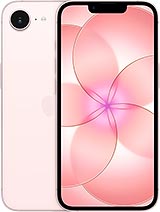
iPhone 17e
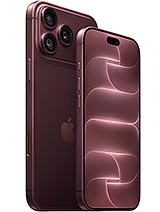
iPhone 18 Pro

iPhone Duo
Galaxy Z Fold7