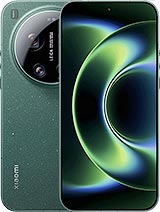
Apple iPhone 17 Pro Max review
The iPhone 17 Pro Max suits photographers, videographers, and people deep in the Apple ecosystem who value a refined display and capable optical zoom. Anyone else—especially those who need all-day heavy use or want faster charging—should seriously consider current Android flagships, which have closed the gap on performance and now lead on battery and charging speed at comparable prices.
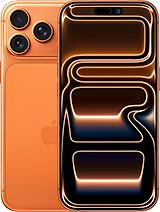
This review is written with AI assistance from Apple’s published specifications and public benchmark data for the Apple iPhone 17 Pro Max, and the rating is spec-based. GoSolo does not physically test devices; where we estimate real-world behaviour such as battery life or charge time, we say so. How we rate phones.
Overview
The iPhone 17 Pro Max is a full-featured flagship with a polished display, capable triple camera, and fast A19 Pro chip, but its 25W charging feels dated for 2025 and the battery barely lasts a full day under heavy use. It's a refined device for those locked into iOS and willing to pay for it, though Android rivals now offer more speed and charging at the same price.
Design & Build
At 233 grams and 8.8 mm thick, the iPhone 17 Pro Max sits toward the upper end of large phones without feeling unusually heavy. The aluminum frame and glass back with Ceramic Shield 2 confirm Apple's familiar formula, though the glass back is more for wireless charging compatibility than durability—most people will use a case anyway. IP68 water resistance to 6 meters for 30 minutes is solid and in line with the competition, meaning the phone survives pool dunkings and brief salt-water splashes without issue. The three color options (Silver, Cosmic Orange, Deep Blue) are conservative choices; nothing here surprises, but nothing offends either. The phone feels put together, if utterly unremarkable.
Display
The 6.9-inch Super Retina XDR OLED screen is a strength. At 1320 × 2868 pixels (460 ppi), sharpness is there without being extreme; text and photos look clean. The LTPO 120Hz panel drops refresh rate intelligently when you are reading or static content is on screen, which should ease battery drain in daily use. Brightness hits 1000 nits typical, 1600 nits in HDR, and 3000 nits peak—that last figure means the phone stays readable in direct sunlight, a real advantage over LCD rivals. HDR10 and Dolby Vision support are table stakes for a 2025 flagship, and the anti-reflective coating cuts glare compared to older iPhone screens. Against current competition, this is a reference display: well-calibrated, smooth, and bright enough.
Performance
The A19 Pro is Apple's top silicon for 2025, built on 3nm process with a hexa-core CPU (two high-performance cores at 4.26 GHz, four efficiency cores at 2.60 GHz) and a 6-core GPU. The AnTuTu score of 2.6 million and GeekBench 6 result of 10,118 put it among the fastest mobile chips available. In practice, this means games like Genshin Impact run at high framerates, 4K video editing is lag-free, and app switching is instant. Paired with 12GB of RAM, the phone handles multitasking without dropping apps from memory. There is no real-world scenario where the A19 Pro feels constrained—it is overkill for anything except professional video or 3D rendering, and even then it handles those without complaint. Against flagship Android rivals, Apple's silicon still competes for raw performance, though the gap has narrowed.
Software
The iPhone 17 Pro Max ships with iOS 26, upgradable to 26.5. iOS remains tightly woven to the hardware, and Apple's vertical integration keeps the experience polished and coherent—no bloatware, consistent design language, and quick OS updates. The lock-in is also real: you are tied to Apple's ecosystem, its App Store rules, and its defaults for browser and mail. iOS 26 introduces incremental refinements rather than wholesale changes; if you are already in the ecosystem, this feels natural, but if you are switching from Android, the difference in customization and file management will be noticeable. For work-focused users or those who value simplicity and privacy guarantees (Face ID, on-device processing), iOS is a strong choice. For tinkerers or those building workflows across Android and other platforms, the walled garden can frustrate.
Camera
The triple rear setup is one of the iPhone 17 Pro Max's defining features. The 48MP main camera (f/1.8, 1/1.28-inch sensor, 1.22 µm pixels) captures sharp detail in most lighting with dual pixel PDAF and sensor-shift OIS. The 100mm periscope telephoto (48MP, f/2.8, 4x optical zoom, 3D sensor-shift OIS) is the differentiator—true 4x zoom without pixel loss sets it apart from rivals that rely on crops or AI upscaling. The 120° ultrawide (48MP, f/2.2, 1/2.55-inch sensor) handles group shots and landscapes without distortion. The 18MP selfie camera (f/1.9, 20mm ultrawide) is more than adequate for video calls and selfies. Video recording is where the Pro Max shines: 4K at up to 120fps, 10-bit HDR, Dolby Vision up to 120fps, ProRes RAW support, and Apple Log 2 colorimetry give filmmakers real creative tools in their pocket. In daylight, photos are excellent; in low light, the main camera and telephoto hold their own against the best Android flagships, though Samsung's Night Portrait mode remains a step ahead. The ultrawide softens more in shadow than the main lens, a minor compromise.
Battery & Charging
The 4823 mAh battery (or 5088 mAh on eSIM-only models) yields roughly 16 to 18 hours of screen-on time with the 120Hz screen in active use, depending on workload. Heavy video shooting, gaming, or constant 5G will cut that closer to 14 to 15 hours. Light to moderate use (messaging, browsing, calls) can stretch a full day, but you will rarely hit 24 hours. The 25W wired charging reaches 50% in about 20 minutes, then slows considerably for the remaining half—by 2025 standards, this is unremarkable and slower than most competitors, which now hit 100W or higher. The 15W MagSafe wireless charging takes roughly 30 minutes to reach 50% and is purely convenient, not fast. For a device this size and price, the combination of modest battery capacity and slow charging is a real weakness: you are likely to need midday or evening top-ups unless your day is light. Many Android flagships offer 5000+ mAh batteries and 100W+ charging, making them more practical for all-day work.
Value & Verdict
At $939 USD (€1173 EU, £1020 UK, ₹149,900 India), the iPhone 17 Pro Max commands flagship pricing in every market. It delivers on performance, display, and imaging—no argument there. But the charging speed (25W), battery size (4823 mAh), and thus needing a charge partway through a heavy day, feel out of step with what Android rivals offer at the same price. The ecosystem lock-in is worth acknowledging: you are paying partly for iOS reliability and privacy, and partly for access to your existing Apple devices and services. If you are already committed to Apple, the Pro Max is the logical end of the line—the 4x telephoto and Dolby Vision video alone justify the step up from the base iPhone 17. If you are price-conscious or switching from Android, the calculus is harder: a OnePlus or Samsung flagships now match or exceed this phone on battery, charging, and raw camera versatility, and cost less in many regions.
Verdict
The iPhone 17 Pro Max suits photographers, videographers, and people deep in the Apple ecosystem who value a refined display and capable optical zoom. Anyone else—especially those who need all-day heavy use or want faster charging—should seriously consider current Android flagships, which have closed the gap on performance and now lead on battery and charging speed at comparable prices.
- 4x optical periscope telephoto and 120° ultrawide give real focal flexibility without relying on crops or digital tricks
- 6.9-inch LTPO OLED screen with 3000-nit peak brightness and 120Hz stays sharp and readable outdoors, and dynamic refresh saves battery when you're not scrolling
- A19 Pro and 12GB RAM handle 4K Dolby Vision 120fps video capture and real-time editing without stuttering
- Ceramic Shield 2 glass and IP68 rating prove durability; the phone shrugs off water to 6 meters and scratches better than standard Gorilla Glass
- 25W wired charging is slow by 2025 flagships—rivals hit 120W or faster, making this feel like a 2022 feature
- 4823 mAh battery with a power-hungry 120Hz screen means you will need to top up before the day ends if you shoot video or game heavily
- Price in most markets now rivals or exceeds Android flagships with faster charging, larger batteries, and competitive cameras, dimming the 'what you pay for' story
Apple iPhone 17 Pro Max Key Specifications
The essentials at a glance. See the full spec sheet.
| Released | 2025, September 09 |
|---|---|
| Display | 6.9 inches, 115.6 cm2 (~90.7% screen-to-body ratio), LTPO Super Retina XDR OLED, 120Hz, HDR10, Dolby Vision, 1000 nits (typ), 1600 nits (HBM), 3000 nits (peak) |
| Resolution | 1320 x 2868 pixels, 19.5:9 ratio (~460 ppi density) |
| Chipset | Apple A19 Pro (3 nm) |
| RAM & storage | 256GB 12GB RAM, 512GB 12GB RAM, 1TB 12GB RAM, 2TB 12GB RAM |
| Main camera | 48 MP, f/1.8, 24mm (wide), 1/1.28", 1.22µm, dual pixel PDAF, sensor-shift OIS 48 MP, f/2.8, 100mm (periscope telephoto), 1/2.55", 0.7µm, PDAF, 3D sensor‑shift OIS, 4x optical zoom 48 MP, f/2.2, 13mm, 120˚ (ultrawide), 1/2.55", 0.7µm, PDAF TOF 3D LiDAR scanner (depth) |
| Selfie camera | 18 MP multi-aspect, f/1.9, 20mm (ultrawide), PDAF SL 3D, (depth/biometrics sensor) |
| Battery | 5088 mAh |
| Charging | Wired, PD3.2, AVS, 50% in 20 min25W wireless MagSafe/Qi2, 50% in 30 min (15W - China)4.5W reverse wired |
| Software | iOS 26, upgradable to iOS 26.5 |
| Dimensions | 163.4 x 78 x 8.8 mm (6.43 x 3.07 x 0.35 in) |
| Weight | 233 g (8.22 oz) |
| Build | Glass front (Ceramic Shield 2), aluminum frame, aluminum back/ glass back (Ceramic Shield) |
| Durability | IP68 dust tight and water resistant (immersible up to 6m for 30 min) Apple Pay (Visa, MasterCard, AMEX certified) |
| Network | GSM / CDMA / HSPA / EVDO / LTE / 5G |
| NFC | Yes |
| USB | USB Type-C 3.2 Gen 2, DisplayPort |
Apple iPhone 17 Pro Max FAQ
Common questions, answered from the spec sheet.
Does the iPhone 17 Pro Max support 5G?
Yes. The iPhone 17 Pro Max supports 5G networks.
What chipset does the iPhone 17 Pro Max use?
The iPhone 17 Pro Max runs on the Apple A19 Pro (3 nm).
What display does the iPhone 17 Pro Max have?
A 6.9 inches, 115.6 cm2 (~90.7% screen-to-body ratio) LTPO Super Retina XDR OLED, 120Hz, HDR10, Dolby Vision, 1000 nits (typ), 1600 nits (HBM), 3000 nits (peak), 1320 x 2868 pixels, 19.5:9 ratio (~460 ppi density).
How big is the iPhone 17 Pro Max battery?
The iPhone 17 Pro Max has a 5088 mAh battery. Charging is rated at Wired, PD3.2, AVS, 50% in 20 min25W wireless MagSafe/Qi2, 50% in 30 min (15W - China)4.5W reverse wired.
Does the iPhone 17 Pro Max have NFC?
Yes, the iPhone 17 Pro Max has NFC.
Is the iPhone 17 Pro Max water resistant?
The iPhone 17 Pro Max carries a IP68 dust tight and water resistant (immersible up to 6m for 30 min) Apple Pay (Visa, MasterCard, AMEX certified) rating.
Does the iPhone 17 Pro Max support a microSD card?
No, the iPhone 17 Pro Max does not support expandable storage.
Does the iPhone 17 Pro Max have a headphone jack?
No, the iPhone 17 Pro Max does not have a 3.5mm headphone jack.
Alternatives to consider
If the iPhone 17 Pro Max isn’t quite right, these are the closest calls.
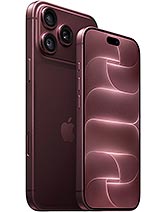
iPhone 18 Pro Max
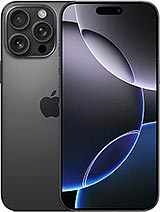
iPhone 16 Pro Max
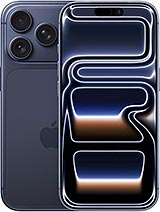
iPhone 17 Pro
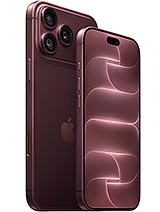
iPhone 18 Pro
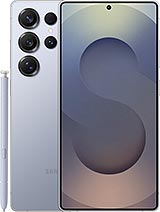
Galaxy S25 Ultra