Apple iPhone 12 review
It suits someone buying secondhand who values water resistance, a bright OLED screen, and iOS's consistent updates over the latest performance or battery endurance. Look elsewhere if you game heavily, scroll obsessively, or recharge twice daily; the 60Hz display and 2815 mAh battery will wear on you.
This review is written with AI assistance from Apple’s published specifications and public benchmark data for the Apple iPhone 12, and the rating is spec-based. GoSolo does not physically test devices; where we estimate real-world behaviour such as battery life or charge time, we say so. How we rate phones.
Overview
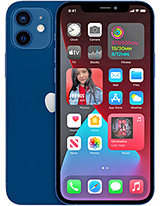
The iPhone 12 is a 2020 flagship with a clean OLED display and the A14 Bionic chip, which still handles everyday work and games smoothly. Its main appeal is durability and water resistance, but the 2815 mAh battery and lack of a high refresh rate make it feel dated against 2024–2026 rivals at the same secondhand price.
Design & Build
The iPhone 12 is compact and light at 164 grams—comfortably pocketable in ways larger flagships no longer are. Glass front and back with an aluminum frame give it a solid feel, but that beauty demands a case; the glass scratches and cracks easily, and the flat edges dig into your hand during extended use. The standout here is durability: IP68 certification to 6 meters for 30 minutes is industry-standard now, but it genuinely matters. Drop it in a swimming pool or a puddle and you can fish it out without panic. Ceramic Shield is tougher than regular Gorilla Glass. These aren't luxury touches—they are practical features that add real value to the used market.
Display
The 6.1-inch Super Retina XDR OLED is excellent for 2020. It gets bright—1200 nits peak, 625 nits sustained in high ambient light—and renders HDR and Dolby Vision content sharply at 460 ppi. Colors are punchy, blacks are true black, and scrolling HDR video is smooth. The catch is the 60Hz refresh rate. By 2026 standards this is genuinely slow. Competitors at the same secondhand price now offer 90Hz or 120Hz as baseline, and once you scroll a 120Hz phone the iPhone 12 feels noticeably clunkier by comparison. Dailyuse emails and texts do not hurt, but gaming and social feeds reveal the limitation. For a phone released in 2020 it was good. For a used buy today it is a trade-off.
Performance
The A14 Bionic (5 nm, AnTuTu 568674) runs YouTube, email, messaging, photography, and light games without stuttering. Genshin Impact plays at medium settings without meaningful lag, and video editing in LumaFusion is feasible. The GPU handles 4K video export in reasonable time. The real limit emerges under sustained load: prolonged gaming or rendering will throttle after 15–20 minutes because thermal headroom is tight in a 164-gram frame. By 2026, chips like the Snapdragon 8 Gen 3 or A18 Pro blow past this, but the A14 remains responsive for everyday work. If you are buying used, you are likely not running demanding workloads constantly; casual gaming, work apps, and media consumption all feel smooth.
Software
iOS 14.1 at launch, now upgradable to iOS 26.5, means this phone will keep receiving updates for at least another year or two. That matters. Android's fragmentation means many two-year-old rival phones are stuck on their launch OS or one update behind; the iPhone gets OS updates for six or seven years. Software refinements, security patches, and new features arrive reliably. There is no bloatware, no carrier junk, no settings maze. If you value simplicity and longevity of support, Apple owns this territory. The trade-off is lock-in: there is no customization, no file manager, and you live within Apple's ecosystem. For some that is peace of mind, for others it is suffocation.
Camera
Dual 12 MP cameras: the wide (f/1.6, 26mm) with optical stabilization and the ultrawide (f/2.4, 120 degrees). The wide-angle lens is the real strength. f/1.6 and PDAF let it grab detail in rooms and evening shots where older iPhones would blur. OIS keeps video steady without electronic cropping. The ultrawide is solid for group photos and tight spaces, though edge distortion is noticeable. Where the iPhone 12 falls short: no telephoto means zooming crops the image and loses quality, so distant objects look soft. Many competitors at the same secondhand price now offer a 3x optical zoom. For everyday shooting—family moments, travel snapshots, social content—the iPhone 12 is more than enough. If you shoot wildlife or sport, the missing telephoto will annoy you.
Battery & Charging
The 2815 mAh battery is the clear weak point. With moderate mixed use (email, browsing, texting, one hour of video), expect 16–17 hours to critical battery. Heavy use (video streaming, gaming, location services) kills it by evening. This has not improved since the iPhone 11, and it is behind rivals that ship 4500+ mAh today. You will need to charge daily, and overnight charging is not optional. On the flip side, 20W wired charging gets you to 50% in 30 minutes, realistic for a morning top-up before leaving home. Wireless MagSafe at 15W is convenient but slow. None of this is catastrophic for a phone you use as your primary device, but it is a known limitation worth accepting upfront.
Value & Verdict Context
At its 2020 launch price, the iPhone 12 was a solid choice. Today, used, at €211–$189, it competes against two-year-old Android flagships and newer budget phones. The durability (IP68, Ceramic Shield, aluminum frame) and software longevity (iOS updates through 2027 or beyond) carry real value in the secondhand market. The OLED display and f/1.6 camera are genuine strengths. The 60Hz display, weak battery, and slow charging are genuine weaknesses. A buyer choosing between a used iPhone 12 and a newer Pixel 6a or Redmi Note 13 should weigh: do you prioritize durability and ecosystem lock-in, or do you want a larger battery and faster refresh rate? Both are honest trade-offs, not flaws.
Verdict
It suits someone buying secondhand who values water resistance, a bright OLED screen, and iOS's consistent updates over the latest performance or battery endurance. Look elsewhere if you game heavily, scroll obsessively, or recharge twice daily; the 60Hz display and 2815 mAh battery will wear on you.
- Bright, sharp OLED display (1200 nits peak, 460 ppi) that reads outdoors and plays HDR content well
- IP68 water and dust resistance rated to 6 meters, plus Ceramic Shield glass—survive real accidents better than plastic alternatives
- A14 Bionic still runs everyday apps, social media, and mid-tier games without lag; four years on it remains responsive
- Solid camera pairing: f/1.6 wide lens with OIS captures sharp low-light shots, and the 120-degree ultrawide is useful for groups and landscapes
- 2815 mAh battery drains to critical levels by evening under moderate use; no improvement over iPhone 11 and heavy video drains it in a session
- 60Hz display refresh rate feels noticeably sluggish compared to 90–120Hz phones now standard at the same secondhand price
- 20W wired charging is slow by modern standards; rivals were hitting 65W three years ago
Apple iPhone 12 Key Specifications
The essentials at a glance. See the full spec sheet.
| Released | 2020, October 13 |
|---|---|
| Display | 6.1 inches, 90.2 cm2 (~86.0% screen-to-body ratio), Super Retina XDR OLED, HDR10, Dolby Vision, 625 nits (HBM), 1200 nits (peak) |
| Resolution | 1170 x 2532 pixels, 19.5:9 ratio (~460 ppi density) |
| Chipset | Apple A14 Bionic (5 nm) |
| RAM & storage | 64GB 4GB RAM, 128GB 4GB RAM, 256GB 4GB RAM |
| Main camera | 12 MP, f/1.6, 26mm (wide), 1.4µm, dual pixel PDAF, OIS 12 MP, f/2.4, 13mm, 120˚ (ultrawide), 1/3.6" |
| Selfie camera | 12 MP, f/2.2, 23mm (wide), 1/3.6", 1.0µm SL 3D, (depth/biometrics sensor) |
| Battery | 2815 mAh |
| Charging | Wired, PD2.0, 50% in 30 min15W wireless (MagSafe)15W wireless (Qi2) - requires iOS 17.4 update |
| Software | iOS 14.1, upgradable to iOS 26.5 |
| Dimensions | 146.7 x 71.5 x 7.4 mm (5.78 x 2.81 x 0.29 in) |
| Weight | 164 g (5.78 oz) |
| Build | Glass front, glass back, aluminum frame |
| Durability | IP68 dust tight and water resistant (immersible up to 6m for 30 min) Apple Pay (Visa, MasterCard, AMEX certified) |
| Network | GSM / CDMA / HSPA / EVDO / LTE / 5G |
| NFC | Yes |
| USB | Lightning, USB 2.0 |
Apple iPhone 12 FAQ
Common questions, answered from the spec sheet.
Does the iPhone 12 support 5G?
Yes. The iPhone 12 supports 5G networks.
What chipset does the iPhone 12 use?
The iPhone 12 runs on the Apple A14 Bionic (5 nm).
What display does the iPhone 12 have?
A 6.1 inches, 90.2 cm2 (~86.0% screen-to-body ratio) Super Retina XDR OLED, HDR10, Dolby Vision, 625 nits (HBM), 1200 nits (peak), 1170 x 2532 pixels, 19.5:9 ratio (~460 ppi density).
How big is the iPhone 12 battery?
The iPhone 12 has a 2815 mAh battery. Charging is rated at Wired, PD2.0, 50% in 30 min15W wireless (MagSafe)15W wireless (Qi2) - requires iOS 17.4 update.
Does the iPhone 12 have NFC?
Yes, the iPhone 12 has NFC.
Is the iPhone 12 water resistant?
The iPhone 12 carries a IP68 dust tight and water resistant (immersible up to 6m for 30 min) Apple Pay (Visa, MasterCard, AMEX certified) rating.
Does the iPhone 12 support a microSD card?
No, the iPhone 12 does not support expandable storage.
Does the iPhone 12 have a headphone jack?
No, the iPhone 12 does not have a 3.5mm headphone jack.
Alternatives to consider
If the iPhone 12 isn’t quite right, these are the closest calls.
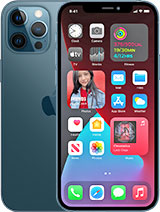
iPhone 12 Pro Max
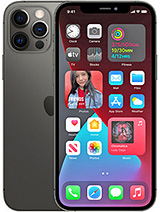
iPhone 12 Pro
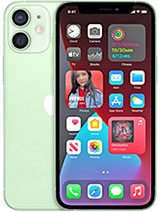
iPhone 12 mini
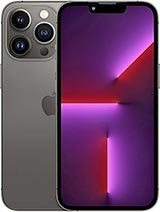
iPhone 13 Pro
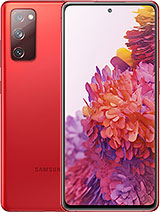
Galaxy S20 FE