Apple iPad Air 2020 review
The iPad Air 2020 suits students, casual readers, and budget-conscious professionals who value screen real estate and battery life over cutting-edge speed and display technology. Anyone doing heavy multitasking, creative work, or gaming should look at newer iPads or Android tablets with more RAM and faster refresh rates; the four-year-old RAM ceiling is a real limitation by 2026.
This review is written with AI assistance from Apple’s published specifications and public benchmark data for the Apple iPad Air 2020, and the rating is spec-based. GoSolo does not physically test devices; where we estimate real-world behaviour such as battery life or charge time, we say so. How we rate phones.
Overview
The iPad Air 2020 is a solid mid-sized tablet for reading, document work, and casual media, powered by a still-competent A14 chip and built with a slim aluminum frame. Its 10.9-inch LCD display and week-long battery are reliable workhorses, but by 2026 it's ageing: 4GB RAM starts to strain heavy apps, the screen lacks OLED brightness and refresh, and no stylus bundle or modern USB fast charging make it feel outpaced for the price.
Design & Build
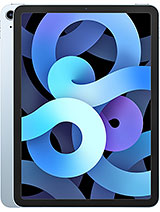
The iPad Air 2020 keeps things simple: aluminum back and frame, glass front, and a chassis that weighs 458 grams. The 6.1 mm thickness is genuinely thin for a 10.9-inch tablet, making it one of the easier slates to slip into a bag or hold for extended reading. The build feels sturdy enough, though by 2026 this design language looks dated next to newer iPads with flatter edges and tighter bezels. The top-mounted fingerprint sensor works reliably for unlock, and support for the second-generation Apple Pencil is present, though the stylus is sold separately and adds to the total cost of ownership.
Display
The 10.9-inch Liquid Retina LCD delivers 1640 by 2360 pixels at 264 ppi, which is sharp enough for text, spreadsheets, and casual video. Peak brightness of 500 nits keeps content visible in daylight, a practical strength for a portable tablet. However, by 2026 standards this is where the age shows: the screen lacks OLED's contrast and color saturation, and the 60 Hz refresh rate feels sluggish compared to 120 Hz competitors at similar money. For document work and reading, the LCD is adequate; for drawing, gaming, or editing, the limitations become apparent after an hour or two.
Performance
The A14 Bionic remains a capable chip six years on, and the hexa-core (2x3.0 GHz Firestorm + 4x1.8 GHz Icestorm) handles everyday tasks without drama. Apps launch briskly, document editing stays smooth, and video playback is seamless. The real brake is 4GB of RAM, which was already modest for a 10.9-inch tablet in 2020 and is now a bottleneck in 2026. Heavy multitasking—say, editing a document while streaming and keeping a photo app open—causes noticeable slowdowns and app reloads. For a student or office worker sticking to two or three active tasks, the Air coasts; for power users or creatives, the RAM shortage is felt.
Software
It ships with iPadOS 14.1 and can be updated all the way to iPadOS 26.4, meaning it will receive security patches and feature updates for years to come. iPadOS 26 brings productivity and AI features, but whether the A14 and 4GB RAM handle them smoothly is another question. The OS itself is not the problem; the hardware limitation is.
Camera
The rear 12 MP camera with f/1.8 aperture and dual-pixel autofocus shoots solid general photos and records 4K video at up to 60 fps. For tablet photography—mostly casual snapshots, documents, or reference shots—this is fine. The 7 MP front camera handles video calls without embarrassment. Neither camera is a reason to buy or avoid this tablet; they are workmanlike and adequate.
Battery & Charging
The 7606 mAh cell translates to roughly 10 to 12 hours of screen-on use under typical mixed workload, which is solid endurance. A full day of email, browsing, and reading is easily achievable without hunting for a socket. Where the tablet stumbles is recharge: Apple does not publish charging wattage for the iPad Air 2020, and the reality is markedly slower than modern tablets. The lack of disclosed fast-charging specs—and the historical reality of iPad charging speeds—means you are looking at several hours for a full charge, well behind 30W+ rivals today.
Value & Verdict Context
At launch in 2020, 640 EUR was a reasonable price for a capable mid-range tablet with the A14 and a large screen. In 2026, this unit is being positioned as a budget option in the iPad line, and it shows. The 4GB RAM is too lean, the LCD screen is noticeably duller and slower than newer rivals, and the missing fast charging means real downtime. If you find it secondhand or on heavy discount, it remains a decent reader and document tablet for students or light office use. New, at anywhere close to its original retail price, it is overpriced for what you get today. Newer budget tablets and even older flagship models with more RAM or OLED screens offer better value in 2026.
Verdict
The iPad Air 2020 suits students, casual readers, and budget-conscious professionals who value screen real estate and battery life over cutting-edge speed and display technology. Anyone doing heavy multitasking, creative work, or gaming should look at newer iPads or Android tablets with more RAM and faster refresh rates; the four-year-old RAM ceiling is a real limitation by 2026.
- A14 Bionic chip and 4GB RAM handle everyday multitasking, document editing, and streaming without stuttering—still competitive for a six-year-old design.
- 10.9-inch LCD with 500 nits brightness remains sharp and readable outdoors; 81% screen-to-body ratio maximizes the working area without bulk.
- Battery life stretches to roughly 10 to 12 hours of screen-on use, covering a full workday without a midday charge.
- Thin (6.1 mm) and light (458 g) for a 10.9-inch tablet, making it portable enough for backpack or messenger bag without fatigue.
- 4GB RAM is becoming a real constraint by 2026: heavy app switching, browser tabs, or creative software will cause noticeable lag where newer competitors coast.
- No charging speed listed and no fast-charging standard for iPad means a full charge takes considerably longer than rivals; USB-C is there but wattage is not disclosed, likely slow.
- LCD screen tops out at 500 nits and lacks 120 Hz refresh, making it noticeably dimmer and choppier than OLED iPad models at comparable prices in 2026.
Apple iPad Air 2020 Key Specifications
The essentials at a glance. See the full spec sheet.
| Released | 2020, September 15 |
|---|---|
| Display | 10.9 inches, 359.2 cm2 (~81.3% screen-to-body ratio), Liquid Retina IPS LCD, 500 nits (typ) |
| Resolution | 1640 x 2360 pixels (~264 ppi density) |
| Chipset | Apple A14 Bionic (5 nm) |
| RAM & storage | 64GB 4GB RAM, 256GB 4GB RAM |
| Main camera | 12 MP, f/1.8, (wide), 1/3.0", 1.22µm, dual pixel PDAF |
| Selfie camera | 7 MP, f/2.0, 31mm (standard) |
| Battery | 7606 mAh |
| Software | iPadOS 14.1, upgradable to iPadOS 26.4 |
| Dimensions | 247.6 x 178.5 x 6.1 mm (9.75 x 7.03 x 0.24 in) |
| Weight | 458 g (Wi-Fi) / 460 g (3G/LTE) (1.01 lb) |
| Build | Glass front, aluminum back, aluminum frame |
| Durability | Stylus support |
| Network | GSM / HSPA / LTE |
| NFC | No |
| USB | USB Type-C, magnetic connector |
Apple iPad Air 2020 FAQ
Common questions, answered from the spec sheet.
Does the iPad Air 2020 support 5G?
No. The iPad Air 2020 tops out at GSM / HSPA / LTE, without 5G.
What chipset does the iPad Air 2020 use?
The iPad Air 2020 runs on the Apple A14 Bionic (5 nm).
What display does the iPad Air 2020 have?
A 10.9 inches, 359.2 cm2 (~81.3% screen-to-body ratio) Liquid Retina IPS LCD, 500 nits (typ), 1640 x 2360 pixels (~264 ppi density).
How big is the iPad Air 2020 battery?
The iPad Air 2020 has a 7606 mAh battery.
Does the iPad Air 2020 have NFC?
No, the iPad Air 2020 does not list NFC support.
Is the iPad Air 2020 water resistant?
The iPad Air 2020 carries a Stylus support rating.
Does the iPad Air 2020 support a microSD card?
No, the iPad Air 2020 does not support expandable storage.
Alternatives to consider
If the iPad Air 2020 isn’t quite right, these are the closest calls.
![iPad Air (4th generation) [2020] product photo](https://api.mobileapi.dev/devices/887/thumb.png)
iPad Air (4th generation) [2020]
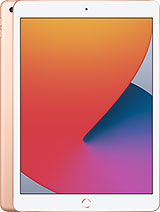
iPad 10.2 2020
![iPad 10.2 (8th generation) [2020] product photo](https://api.mobileapi.dev/devices/886/thumb.png)
iPad 10.2 (8th generation) [2020]
![iPad Pro 12.9-inch (4th generation) [2020] product photo](https://api.mobileapi.dev/devices/868/thumb.png)
iPad Pro 12.9-inch (4th generation) [2020]
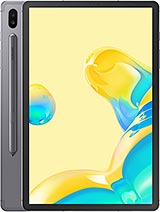
Galaxy Tab S6 5G