Apple iPad 10.2 2020 review
This is for people who read PDFs, watch video, and browse on a budget and can live with 2020-era performance and a dimmer screen than you'll find on newer tablets. If you regularly run demanding apps or expect the device to age gracefully, save for a newer iPad or consider a more current Android alternative.
This review is written with AI assistance from Apple’s published specifications and public benchmark data for the Apple iPad 10.2 2020, and the rating is spec-based. GoSolo does not physically test devices; where we estimate real-world behaviour such as battery life or charge time, we say so. How we rate phones.
Overview
The 2020 iPad 10.2 remains a solid all-rounder for reading, video, and light document work on a tight budget, but its four-year-old A12 chip and modest display brightness are now showing their age against newer entry-level tablets. For the global south where €370 is still meaningful money, it works well for everyday tasks—just don't expect it to power through heavy apps or gaming without slowdown.
Design & Build
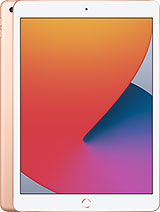
At 490 grams and 7.5mm thick, this is slim and light enough to hold in one hand while reading or watching video for an hour. The glass-and-aluminum frame feels solid, though it picks up smudges easily. The stylus support is noted in the spec, though no stylus comes in the box. For a tablet aimed at the budget market, the build materials feel appropriately durable without unnecessary heft.
Display
The 10.2-inch Retina IPS LCD at 1620x2160 and 264 ppi is designed for content consumption and productivity, not precision photo work. The 4:3 aspect ratio is genuinely useful for reading and documents—far more practical than the 16:9 common in cheaper Android tablets. Brightness tops out at 500 nits, which is serviceable indoors and acceptable in moderate outdoor light, though it feels noticeably dim next to modern iPads that reach 600 nits or more. For reading PDFs and books, the matte finish and color accuracy hold up well; fine text at arm's length remains legible, though not as crisp as a phone's higher pixel density.
Performance
The A12 Bionic from 2018 is no longer cutting edge. Everyday tasks—email, browsing, video streaming, light document editing—work smoothly without stutter. Apps launch quickly and multitasking feels responsive. However, demanding mobile games, heavy video editing, or complex spreadsheets with thousands of rows will show lag that feels outdated if you've used a current iPad Air or base iPad Pro. For a four-year-old chip, the A12 still holds up acceptably for its intended audience: people who read, watch, and browse, not create 4K video or run professional apps. The 3GB RAM is lean by today's standards and contributes to occasional app reloads if you switch between too many open apps at once.
Software
Shipped with iPadOS 14 and upgradable to iPadOS 26.4, so you have years of security updates and new features ahead. iPadOS on this screen size is genuinely better suited to work than iOS on a phone—split-screen multitasking, the ability to resize windows, and full file management make it feel like a productivity tool rather than a scaled-up phone. App support will remain broad for at least another two to three years, though older hardware starts losing access to newer app features eventually.
Camera
The 8MP rear camera records clear 1080p video and handles well-lit photos without issue, but low-light shots are visibly grainy and lack detail. It's acceptable for documenting a whiteboard, scanning receipts, or recording quick video messages, but not for casual photography. The 1.2MP front camera is strictly for video calls; image quality is basic but functional on a 10-inch screen. Nobody should buy this tablet expecting good camera performance.
Battery & Charging
The 8827 mAh battery delivers roughly 10 hours of mixed use—web browsing, email, light video—before needing a charge. Heavy video streaming or gaming will cut that closer to 8 hours. For a device designed for content consumption, this is fit for purpose: a morning charge sees you through a workday or a long flight. The spec sheet includes no charging wattage detail, but iPad charging is traditionally slow compared to phones; expect 2–3 hours from empty with a standard charger.
Value & Verdict
At €370, the iPad 10.2 sits in a price band where budget Android tablets are common, yet Apple's ecosystem advantage—app quality, security updates, integration with Mac or iPhone if you own them—gives it weight. The main trade-off is age: you are buying a 2020 design with a 2018 chip at a 2026 price. Rivals now include newer entry-level iPad options (if available in your market) with faster chips or the latest iPad Air with a modern processor—if budget permits. For someone in the global south where this price point represents real money, the question is whether you need lasting performance or can accept that this device will feel noticeably slower in two more years. For reading, video, and web work, it will remain functional. For anything demanding, it's already showing age.
Verdict
This is for people who read PDFs, watch video, and browse on a budget and can live with 2020-era performance and a dimmer screen than you'll find on newer tablets. If you regularly run demanding apps or expect the device to age gracefully, save for a newer iPad or consider a more current Android alternative.
- 10.2" 4:3 display with 500 nits brightness suits reading, web, and office work far better than narrower 16:9 tablets or phones
- Solid 10-hour battery life covers a full day of mixed use (browsing, email, video) without reaching for the charger mid-afternoon
- Lightweight and thin at 490g and 7.5mm, easy to hold one-handed for reading or propped for video calls
- A12 Bionic is now four years old and noticeably slower at demanding tasks like gaming or video editing compared to current iPad Air or Pro models
- Base 32GB model fills quickly with apps, photos, and videos; no expansion slot means the 128GB version is almost mandatory for anything beyond light use
Apple iPad 10.2 2020 Key Specifications
The essentials at a glance. See the full spec sheet.
| Released | 2020, September 15 |
|---|---|
| Display | 10.2 inches, 324.6 cm2 (~74.4% screen-to-body ratio), Retina IPS LCD, 500 nits (typ) |
| Resolution | 1620 x 2160 pixels, 4:3 ratio (~264 ppi density) |
| Chipset | Apple A12 Bionic (7 nm) |
| RAM & storage | 32GB 3GB RAM, 128GB 3GB RAM |
| Main camera | 8 MP, f/2.4, 31mm (standard), 1.12µm, AF |
| Selfie camera | 1.2 MP, f/2.2, 31mm (standard) |
| Battery | 8827 mAh |
| Software | iPadOS 14, upgradable to iPadOS 26.4 |
| Dimensions | 250.6 x 174.1 x 7.5 mm (9.87 x 6.85 x 0.30 in) |
| Weight | 490 g (Wi-Fi) / 495 g (LTE) (1.08 lb) |
| Build | Glass front, aluminum back, aluminum frame |
| Durability | Stylus support |
| Network | GSM / HSPA / LTE |
| NFC | No |
| USB | Lightning, USB 2.0; magnetic connector |
Apple iPad 10.2 2020 FAQ
Common questions, answered from the spec sheet.
Does the iPad 10.2 2020 support 5G?
No. The iPad 10.2 2020 tops out at GSM / HSPA / LTE, without 5G.
What chipset does the iPad 10.2 2020 use?
The iPad 10.2 2020 runs on the Apple A12 Bionic (7 nm).
What display does the iPad 10.2 2020 have?
A 10.2 inches, 324.6 cm2 (~74.4% screen-to-body ratio) Retina IPS LCD, 500 nits (typ), 1620 x 2160 pixels, 4:3 ratio (~264 ppi density).
How big is the iPad 10.2 2020 battery?
The iPad 10.2 2020 has a 8827 mAh battery.
Does the iPad 10.2 2020 have NFC?
No, the iPad 10.2 2020 does not list NFC support.
Is the iPad 10.2 2020 water resistant?
The iPad 10.2 2020 carries a Stylus support rating.
Does the iPad 10.2 2020 support a microSD card?
No, the iPad 10.2 2020 does not support expandable storage.
Alternatives to consider
If the iPad 10.2 2020 isn’t quite right, these are the closest calls.
![iPad 10.2 (8th generation) [2020] product photo](https://api.mobileapi.dev/devices/886/thumb.png)
iPad 10.2 (8th generation) [2020]
![iPad Pro 12.9-inch (4th generation) [2020] product photo](https://api.mobileapi.dev/devices/868/thumb.png)
iPad Pro 12.9-inch (4th generation) [2020]
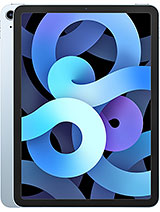
iPad Air 2020
![iPad Air (4th generation) [2020] product photo](https://api.mobileapi.dev/devices/887/thumb.png)
iPad Air (4th generation) [2020]
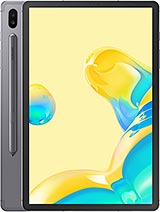
Galaxy Tab S6 5G